The Paradox of the Brand-New Room
A home constructed entirely from freshly unboxed showroom pieces inevitably feels like a commercial catalog. It lacks tension, memory, and soul. Integrating historical antiques—pieces bearing genuine scratches, sun fading, and handcrafted joinery marks—bridges the gap between architecture and authentic living.
"Patina is the physical registration of time. When introduced to a crisp modern interior, it grounds the space with quiet gravity."
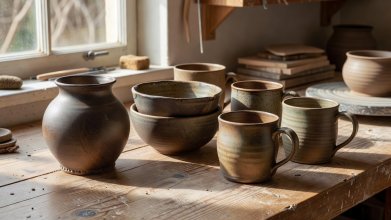 Mid-Century Ceramic
Wood-Fired Stoneware
Artifacts produced in Swedish and Japanese mid-century studios introduce imperfect silhouettes that balance precise rectilinear shelving.
Evaluation Protocol for Vintage Acquisitions
| Evaluation Pillar | What to Look For | Studio Red Flags |
|---|---|---|
| Structural Integrity | Original mortise-and-tenon joints, intact dowel pins | Excessive modern hot-glue or drywall screws inside joints |
| Surface Patina | Even oxidation, gentle honeying on natural timber | Aggressive industrial stripping or synthetic polyurethane gloss re-coats |
| Makers Marks | Branded stamps, paper atelier labels under rail | Inconsistent typography or missing expected fabrication marks |
| Ergonomic Utility | Solid sit, sturdy armrest resistance | Rotting internal foam dust falling through base webbing |
Curating the 80/20 Ratio
To avoid a cluttered antique-shop aesthetic, we recommend an 80/20 ratio: 80% disciplined architectural planes, seamless built-in joinery, and clean upholstery, punctuated by 20% expressive, character-rich vintage objects. This ensures historical pieces stand out as singular sculptures rather than background clutter.
Connect with Our Practice
Learn more about our design philosophy or review common client queries.
Read Studio Ethos