The Honesty of Geological Porosity
Commercial stone manufacturing often attempts to 'perfect' Roman travertine by filling its natural sedimental cavities with synthetic resins, polishing the surface to an artificial mirror sheen. We advocate for unfilled, honed slabs. Leaving the stone open honors its ancient mineral formation and yields acoustic diffusion benefits within domestic spaces.
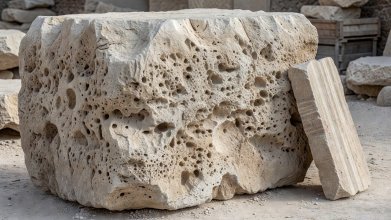 Mineral Specimen
Navona Travertine
Warm ivory and oat striations formed by geothermal mineral springs. Ideal for monolithic low tables and hearth surrounds.
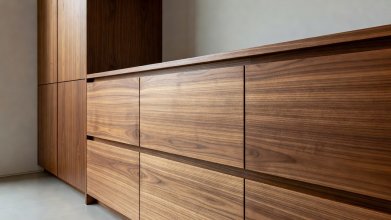 Hardwood Grain
Quarter-Sawn Timber
Cut perpendicular to the growth rings to reveal tight, stable grain patterns that resist seasonal expansion and contraction.
Material Specification Matrix
| Material Element | Recommended Finish | Tactile Quality | Maintenance Protocol |
|---|---|---|---|
| Roman Travertine | Honed, Unfilled | Cool, velvety, micro-textured | Ph-neutral natural stone soap only; no acidic sealants |
| European Oak | Matte Hardwax Oil | Warm, dry, pronounced grain ridges | Annual organic wax buffing; embraces natural darkening |
| Belgian Flax Linen | Stonewashed, Raw Selvedge | Crisp yet soft, natural slubs | Gentle cold wash; line dried to preserve fiber elasticity |
| Troweled Lime Plaster | Matte Calcite Soap Burnish | Chalky, breathable, light-refracting | Self-cleaning mineral respiration; spot clean with water |
Acoustic Dampening Through Material Variance
Minimalist rooms frequently suffer from harsh reverberation times. By consciously pairing hard reflective planes (travertine, lime plaster) with deeply absorbent textures (heavy wool rugs, unlined linen drapes, open-grain wood book stacks), we engineer tranquil acoustic soundscapes without relying on synthetic acoustic foam panels.
Incorporate Historical Depth
Pair raw foundational materials with curated mid-century artifacts for layered character.
Explore Vintage Sourcing